


/file/publisher-c1a3f893382d2b2f8a9aa22a654d9c97/2025/06/270b763924d11bd017ccfd6668d04ef9.jpg)

SST on imported fruits pose nutritional risks, consumer groups warn
However, the government’s announcement yesterday revealed that all imported fruits - even the humble apple - have been categorised as non-essential items and will be slapped with a five percent sales tax.
The new tax, set to come into effect on July 1, has...
Summary
Consumer groups warn that the five percent SST on all imported fruits could reduce access to essential nutrients, disproportionately affecting lower-income Malaysians.
Local fruits remain tax-exempt, but concerns mount over supply shortages and possible price hikes.
Critics urge the government to boost local fruit production before the tax rollout on July 1 to avoid unintended health consequences.
In tabling Budget 2025, Prime Minister Anwar Ibrahim cited avocados as an example of “premium” imported fruits that would cost more under an expanded Sales and Services Tax (SST) scheme.
However, the government’s announcement yesterday revealed that all imported fruits - even the humble apple - have been categorised as non-essential items and will be slapped with a five percent sales tax.
The new tax, set to come into effect on July 1, has incited significant concerns among consumer groups, which warned that price pressures could lead to detrimental health effects by limiting overall fruit consumption among the public.
While local fruits remain exempt from the sales tax, Federation of Malaysian Consumers Associations’ (Fomca) chief operating officer Nur Asyikin Aminuddin highlighted that a shift away from imported varieties puts pressure on the local supply market.
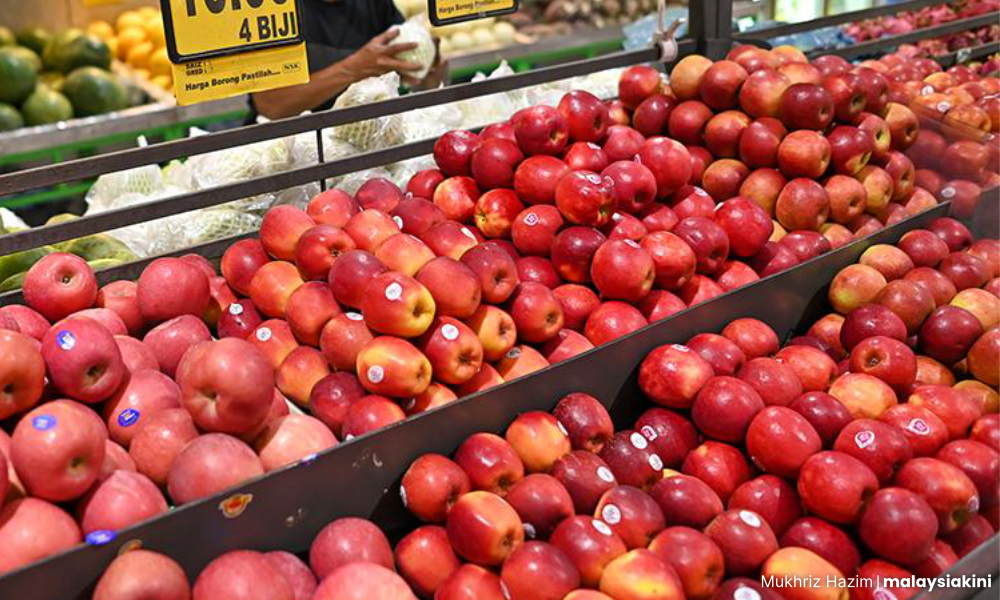
“(The taxing of imported fruits) may encourage the consumption of locally grown produce - a positive outcome in many respects. But, it also raises questions about whether the supply of local fruits can meet the increased demand,” she told Malaysiakini.
Acknowledging the government’s effort to broaden the SST base and increase revenue, Nur Asyikin raised the matter of local fruit prices potentially rising due to increased demand, thus excluding vital nutrients from those unable to afford them.
“If local fruits become more sought-after, we hope that their prices remain affordable for all consumers, rather than rising due to increased demand,” she added.
Domestic produce might also not be as affordable as one would assume. Consumers’ Association of Penang president Mohideen Abdul Kader noted that some locally produced fruits can be more expensive than certain imported varieties due to supply issues.
“There is a shortage of local fruits (in the market) to the extent that Malaysia has to import from Thailand some of the ‘local’ fruits which were once abundantly grown in orchards and gardens here,” he said when contacted.
Attributing the issue to a lack of agricultural land in the nation, Mohideen pointed out that farmlands converted into housing estates and commercial centres resulted in a deficit of local fruits, and subsequently, a ballooning of their prices.
“Consequently, families buy fewer fruits. Thus, they are deprived of vitamins, minerals, and fibres needed for health. On top of that, children who are not used to eating fruits may develop an aversion to the taste and texture of fruits,” he added.
He also recommended that the government increase the production of local fruits to ensure a drop in their prices before implementing the sales tax on imported fruits.
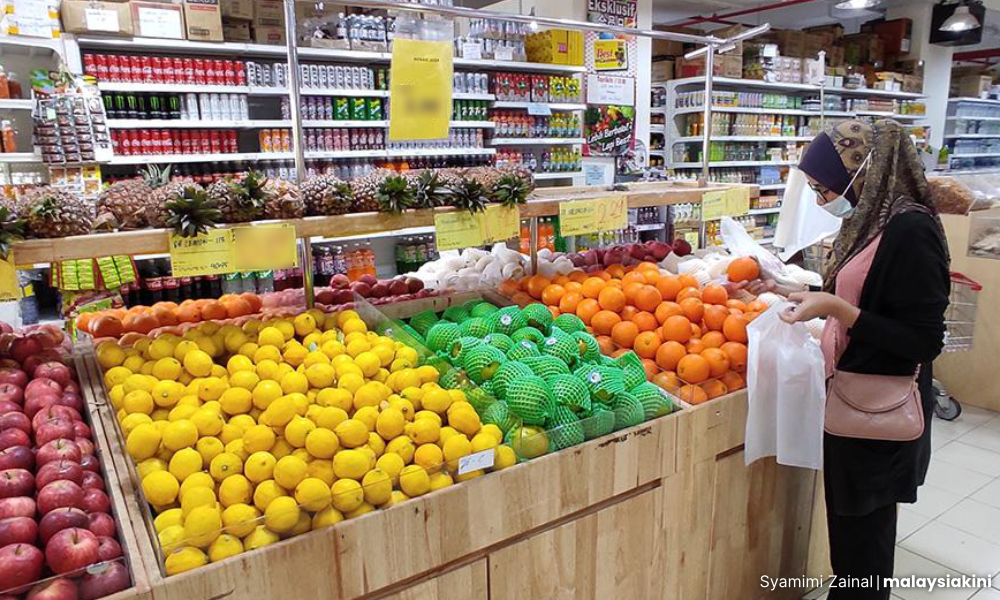
“It would only be fair then. We also encourage people to plant fruit trees in their gardens, if feasible, as they had in the past,” he added.
Besides imported fruits, a five percent sales tax will also be levied on products such as king crab, salmon, cod, truffle mushrooms, essential oils, silk fabrics, and industrial machinery.
Ministry-recommended fruits
According to checks by Malaysiakini on nutrition guidelines published by the Health Ministry, one document featured a list of fruits recommended for diabetic patients.
The fruits listed featured a mix of local and foreign produce, including rambutan, prunes, durian, mangoes, apples, oranges, pears, peaches, persimmons, and jackfruit. A serving portion of 15g of carbohydrates was also detailed.
However, other publications available on the ministry’s website, such as its nutritional guidelines for senior citizens and combating malnutrition among children, do not specify any particular fruit in their descriptions for healthy meals.
/file/publisher-c1a3f893382d2b2f8a9aa22a654d9c97/2025/06/92acb1c0e0f1571cca8ecc48e3abb978.jpg)
/file/publisher-c1a3f893382d2b2f8a9aa22a654d9c97/2023/10/e9ab584cf212b06c20615d0e7bdfaefa.jpg)
/file/publisher-c1a3f893382d2b2f8a9aa22a654d9c97/2024/11/543fbd7ee0c031707a76510097169ff4.jpg)


Report this comment
Are you sure you want to delete this comment?
This action cannot be undone.